Define customer fit
Map access, material and unloading needs to models. Keep standard tipping and optional lifting equipment separate.

Build a compact dumper range for contractors working around narrow access and short material routes. Compare DT models by load, dimensions and the discharge arrangement your customers need.
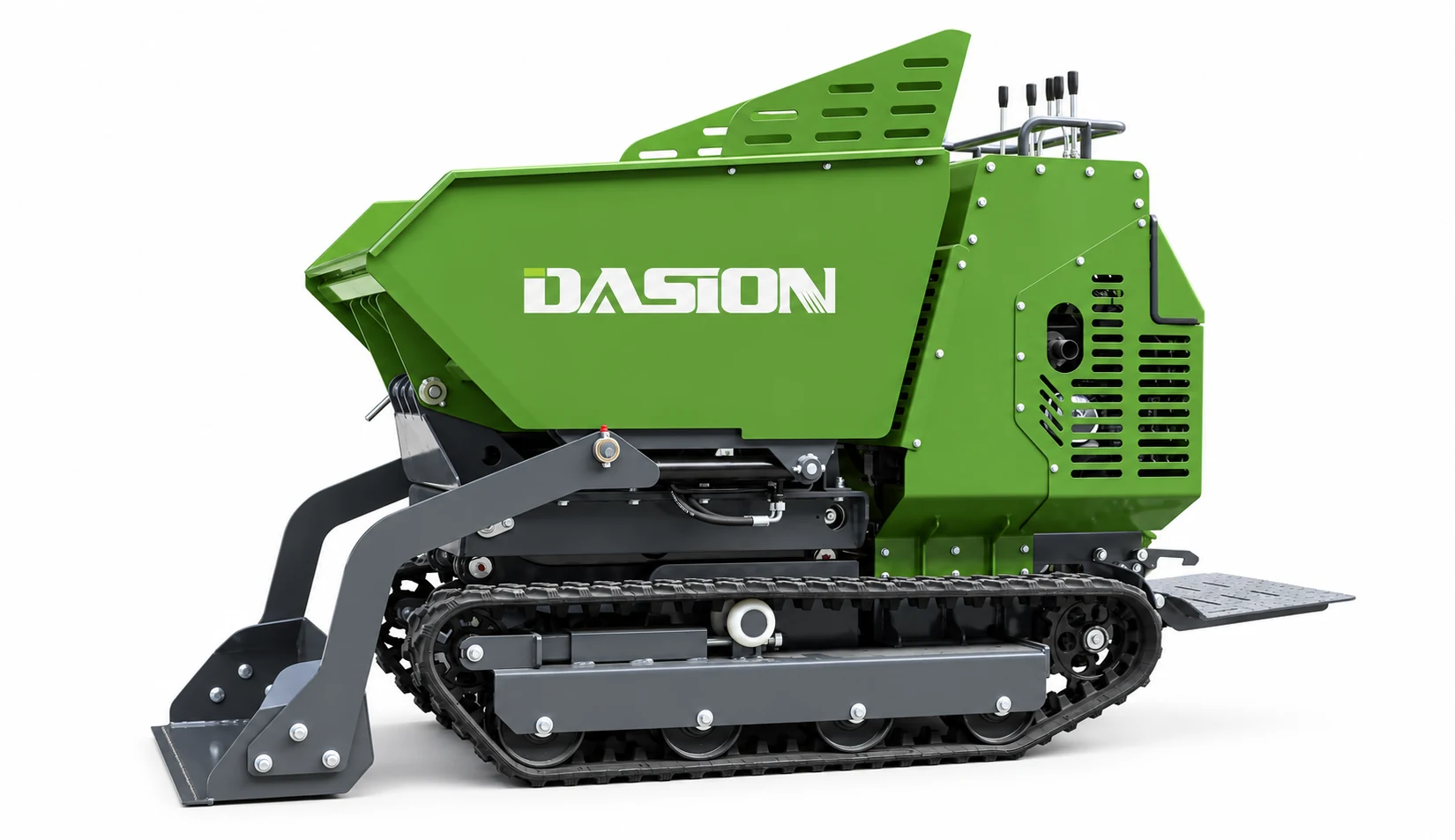 Proposed IDASION paint scheme
A mini lifting dumper carries bulk material in a compact hopper. Tipping, lifting and rotating arrangements are configuration-specific. Match the load, material density, route and receiving height rather than choosing by a model number alone.
Model references: DT500 / DT500S / DT1000 / DT1200
| Item | Configuration / reference |
|---|---|
| Source-listed bucket volume | 0.5~0.75~1.0~1.2t |
| Published tipping | 90°; lifting/rotating listed as options |
| Engine | Gasoline |
| Starting method | Electric start |
| Order checks | Payload, hopper, machine width and discharge drawing |
| Specification | DT500 | DT500S | DT1000 | DT1200 |
|---|---|---|---|---|
| Engine power | 4.81 kW / 6.5 hp | 4.81 kW / 6.5 hp | 10.07 kW / 13.5 hp | 10.07 kW / 13.5 hp |
| Load capacity | 500 kg | 500 kg | 1000 kg | 1800 kg |
| Net weight | 416 kg | 535 kg | 650 kg | 850 kg |
| Overall dimensions, source sequence (mm) | 2050 / 880 / 1300 | 2050 / 880 / 1450 | 2500 / 900 / 1560 | 2470 / 900 / 1400 |
Confirm the hopper, lifting or rotating option and discharge geometry in the written configuration. Check load and hopper specifications separately.
Confirm the exact model, options, destination requirements and delivered configuration in the written quotation. Family ranges describe different models, not simultaneous performance.
A focused DT range helps dealers serve narrow-site transport jobs. Quote the actual payload, width and unloading configuration, with a practical parts plan.
Map access, material and unloading needs to models. Keep standard tipping and optional lifting equipment separate.
Request dimensions, drawings, available inspection records and packing details for the same specified configuration.
Request the model-specific manual, parts identification and maintenance schedule. Confirm initial consumables, warranty handling and local service responsibilities.
Use the customer application, exact configuration and support plan to compare offers.
Collect the narrowest entrance, turning space, overhead clearance, route surfaces and gradients. Compare the ordered machine's transport and working dimensions.
Record material type, required load, receiving height and clearance. Confirm standard tipping versus a lifting or rotating option using the offered drawing.
Keep model, engine, hopper and accessories explicit. Include packing, local preparation, parts and warranty responsibilities in the landed cost.
A useful offer explains both the equipment and the supply scope.
Compare the exact model, power, working configuration and included items. Keep standard equipment and options separate in each quotation.
State the destination. Confirm transport dimensions, loading arrangements and the agreed quotation basis before comparing delivered costs.
Request model-specific manuals, parts references, maintenance information and warranty responsibilities. Discuss your local service resources and repeat-order plan.
Clarify the equipment and cooperation scope before placing an order.
Discuss Your RequirementsNo. Load mass and carrying space answer different questions. Use material density and the ordered payload limit together. The source-listed bucket field is retained as supplied; request the final hopper drawing and specification for the order.
Do not assume this. The source lists tipping with lifting or rotating options. Confirm the supplied mechanism, discharge height and working clearance in the quote.
No. Do not infer specifications from a model name. The published table shown here lists 1800 kg for DT1200, retained from the source as requested. Confirm the final machine sheet before ordering.
Match local contractor demand by material, payload, access width and unloading arrangement. Compare packing, preparation and service needs alongside acquisition cost.
Provide company, quantities, destination, material, desired load, access width, surface, gradients and receiving height. State whether lifting or rotation is needed.
Request engine and running-gear parts identification, maintenance guidance, initial consumables and the warranty process. Agree local diagnosis and parts-order responsibilities.
Use the buying guidance and distributor information to prepare your next discussion.
A dealer sourcing decision needs a repeatable configuration, evidence of the supply source and a workable parts and order process. Compare those elements alongside the landed purchase scope before selecting equipment for your local range.
Read the GuideA compact equipment import budget should cover the selected machines, packing, transport, destination expenses and preparation for work or resale. Start with a fixed specification and explicit responsibilities so competing prices describe a comparable purchase.
Read the GuideShare the product, configuration, customer application and destination. These details help us discuss a useful B2B supply proposal.