Qualify operating capacity
Request model-specific capacity and attachment information. Keep maximum loading and tipping claims separate from usable rated operation.

Offer compact skid steer loaders around the jobs your customers perform. Compare SL models, operator arrangements and attachment requirements, then define the wheeled or tracked configuration and service package for each order.
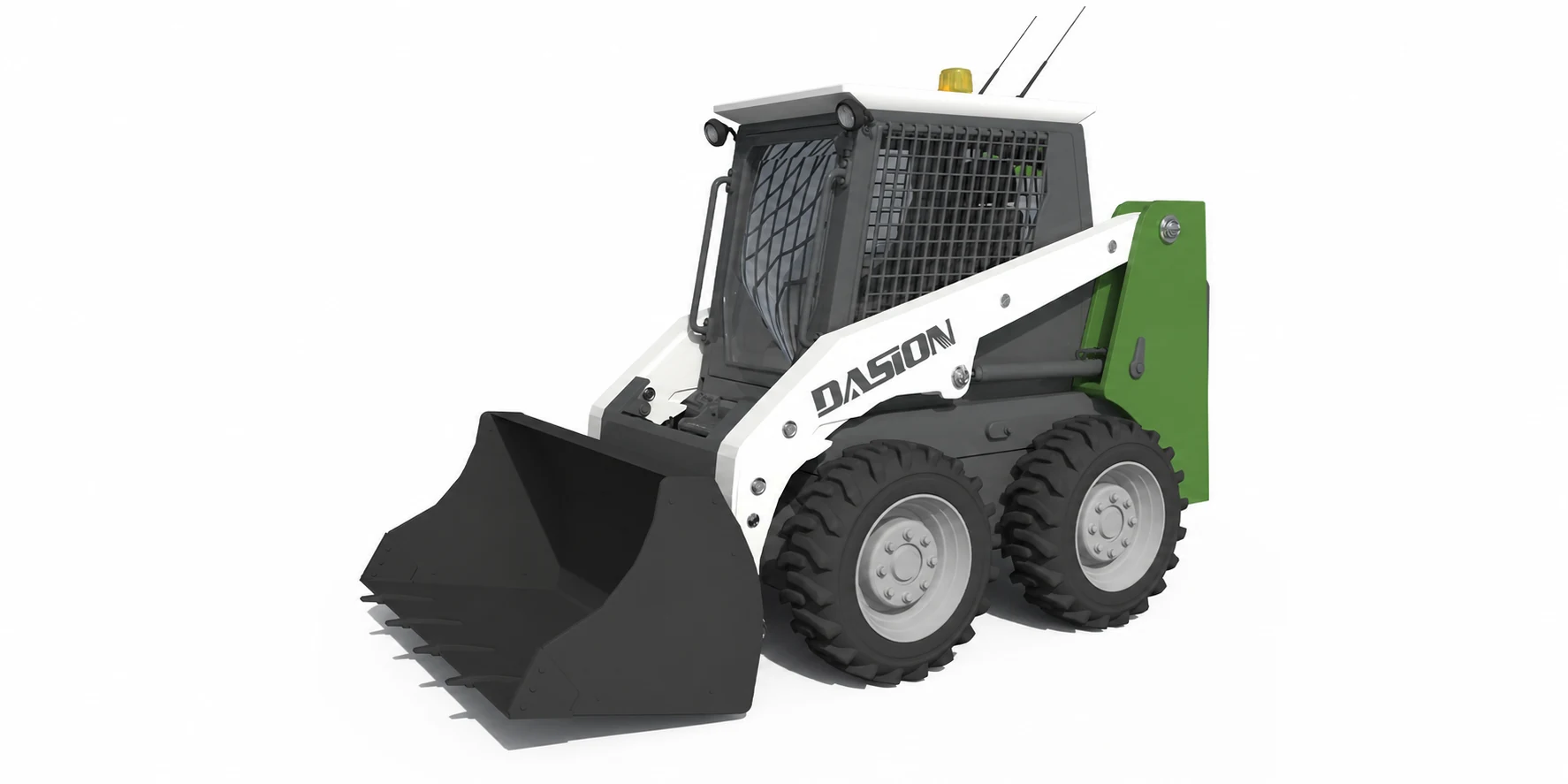 Proposed IDASION paint scheme
A skid steer loader is a compact tool carrier used for loading, site preparation and other tasks with compatible attachments. Published maximum loading, rated operating capacity and tipping load must not be assumed to be interchangeable.
Model references: SL25 / SL300 / SL380 / SL430 / SL380B
| Item | Configuration / reference |
|---|---|
| Source load field | Max. Loading; test basis to confirm |
| Travel type | Wheeled / tracked, confirm by offered variant |
| Attachment requirements | Coupling, hydraulic pressure, flow and return arrangement |
| Missing source details | Auxiliary flow and attachment-specific capacity not published in the table |
| Specification | SL25 | SL300 | SL380 | SL430 | SL380B |
|---|---|---|---|---|---|
| Published Max. Loading | 500 kg | 300 kg | 380 kg | 430 kg | 380 kg |
| Published operating weight alternatives | 1550 / 1640 kg | 780 / 850 kg | 820 / 910 kg | 950 / 1030 kg | 710 / 780 kg |
| Engine power | 18.6 kW / 25 hp | 10.1 kW / 13.5 hp | 17.2 kW / 23 hp | 17.2 kW / 23 hp | 10.1 kW / 13.5 hp |
| Published control layout | Seat | Open seat | Rear standing platform | Rear standing platform | Rear standing platform |
| Dimensions, source sequence (mm) | 2650 / 1000 / 1950 | 2680 / 1000 / 2100 | 2500 / 1200 / 1350 | 2600 / 1200 / 1350 | 2500 / 1200 / 1350 |
Max. Loading is the published load field, not a certified rated operating capacity (ROC). Confirm the operating mass for the selected wheeled or tracked configuration, attachment and hydraulic specification.
Confirm the exact model, options, destination requirements and delivered configuration in the written quotation. Family ranges describe different models, not simultaneous performance.
The machine and attachment form one customer solution. Make compatibility and hydraulic scope visible in dealer quotations and repeat orders.
Request model-specific capacity and attachment information. Keep maximum loading and tipping claims separate from usable rated operation.
Record couplers, flow, pressure and approved combinations. Do not market every tool as interchangeable.
Request the model-specific manual, parts identification and maintenance schedule. Confirm initial consumables, warranty handling and local service responsibilities.
Use the customer application, exact configuration and support plan to compare offers.
Separate bucket loading, pallet handling and powered-attachment work. Collect material weight, access and the expected working pattern.
Request rated operating capacity and its test basis, attachment weight, coupler details and auxiliary hydraulics. Do not assume a standard or high-flow circuit is included.
Compare chassis, controls, dimensions and transport weight. Record approved tools, wear parts and service documents for each stock configuration.
A useful offer explains both the equipment and the supply scope.
Compare the exact model, power, working configuration and included items. Keep standard equipment and options separate in each quotation.
State the destination. Confirm transport dimensions, loading arrangements and the agreed quotation basis before comparing delivered costs.
Request model-specific manuals, parts references, maintenance information and warranty responsibilities. Discuss your local service resources and repeat-order plan.
Clarify the equipment and cooperation scope before placing an order.
Discuss Your RequirementsThe source table does not establish that equivalence. Ask for the rated operating capacity, tipping-load information and test basis for the actual machine and attachment before qualifying customer loads.
Potential tasks include loading, drilling, breaking and cleanup, but compatibility depends on the coupler, hydraulics, attachment weight and machine limits. Obtain model-specific confirmation for every offered tool.
No high-flow specification is established by the published table. Ask for auxiliary flow, pressure, couplings and any return or drain requirements for the intended attachment.
Compare surfaces, access, ground interaction, transport and maintenance for the actual work. Confirm the supplied chassis variant and its dimensions rather than assigning source weight alternatives by assumption.
The source lists both layouts. Assess customer duties, access, operator arrangements and the model instructions. Do not infer enclosed cab or protective features from a generic image.
Specify model, chassis, engine, control layout, coupler, attachments and hydraulic package, plus packing, manuals, parts and warranty procedures. Record any later configuration changes in writing.
Use the buying guidance and distributor information to prepare your next discussion.
A dealer sourcing decision needs a repeatable configuration, evidence of the supply source and a workable parts and order process. Compare those elements alongside the landed purchase scope before selecting equipment for your local range.
Read the GuideChoose compact equipment by the task it must complete: transporting material, loading and working with attachments, compacting a specified surface, or producing small concrete batches. Site width is important, but payload, working envelope, material and the complete cycle determine whether a small machine fits the job.
Read the GuideShare the product, configuration, customer application and destination. These details help us discuss a useful B2B supply proposal.