Keep the mini scope clear
Use EP750B data and separate output from drum volume. Do not substitute images or specifications from larger self-loading mixers.

Offer compact on-site mixing for customers whose demand, access and placing schedule fit the EP750B. This page covers the mini model only, with concrete output and drum volume shown separately.
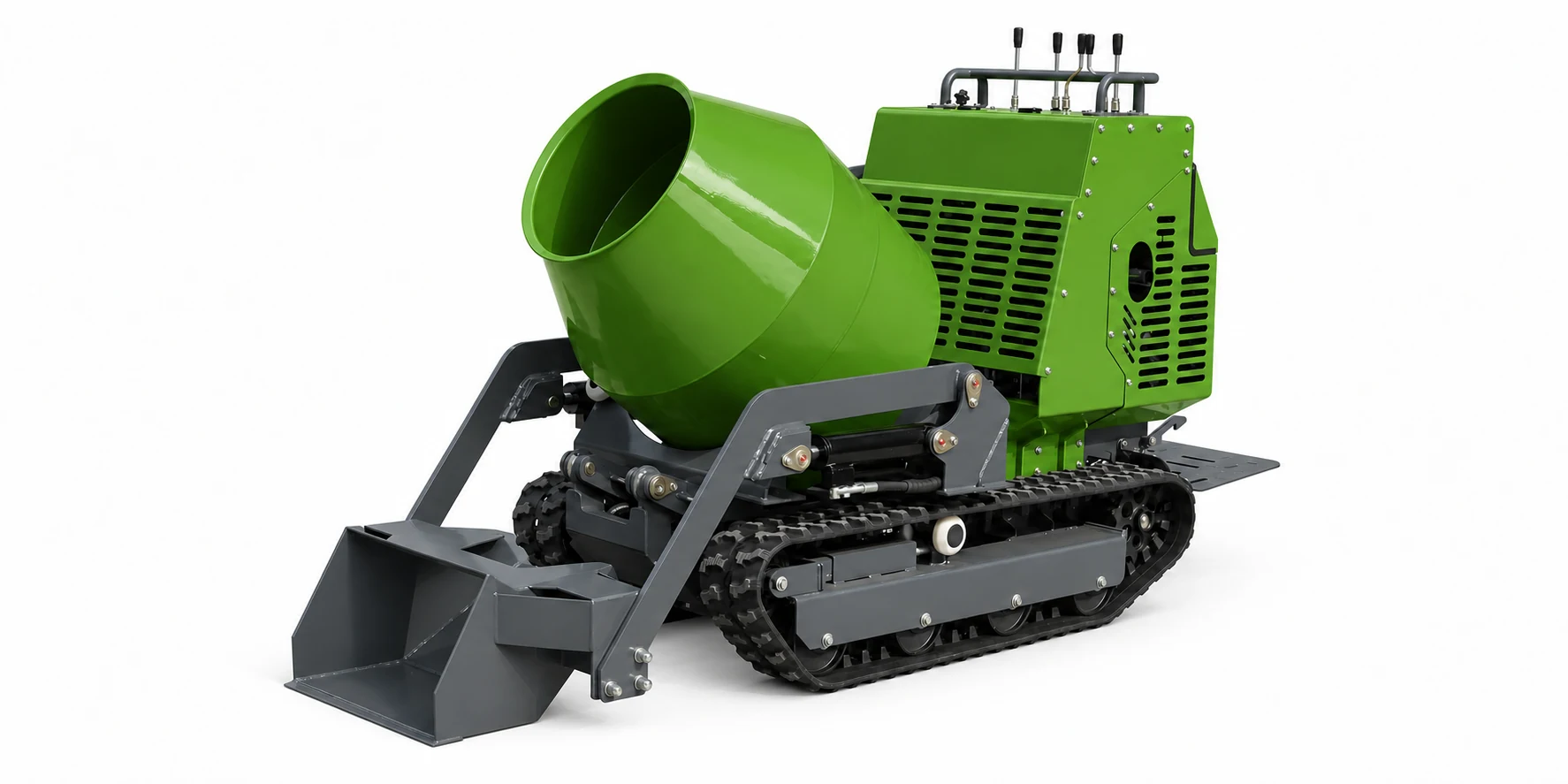 Proposed IDASION paint scheme
A mini self load concrete mixer brings material loading, mixing and discharge into a compact site workflow. Selection must match actual concrete yield, route, discharge arrangement and the project's mix-control and testing requirements.
Model references: EP750B
| Item | Configuration / reference |
|---|---|
| Product scope | Mini EP750B only |
| Published output | 0.2 m³; confirm usable yield for the proposed mix |
| Engine | Gasoline |
| Daily production | Depends on the complete site cycle |
| Configuration to verify | Material and water measurement, loading and discharge arrangement |
| Specification | EP750B |
|---|---|
| Published output reference | 0.2 m³ |
| Engine power, published hp | 13.5 hp |
| Engine | Gasoline |
| Load capacity | 750 kg |
| Net weight | 750 kg |
| Mixing drum capacity | 300 dm³ |
| Overall dimensions (L × W × H) | 2500 × 900 × 1500 mm |
Concrete output and drum volume are different measures. Daily production depends on the full site cycle. Confirm the usable batch yield, measuring arrangement and exact engine configuration.
Confirm the exact model, options, destination requirements and delivered configuration in the written quotation. Family ranges describe different models, not simultaneous performance.
Dealers need an accurate mini-equipment proposition; project buyers need a workable concrete supply cycle. Confirm the same machine and configuration in the offer, order and handover.
Use EP750B data and separate output from drum volume. Do not substitute images or specifications from larger self-loading mixers.
Assess route, loading, water, discharge and the concrete quality plan. Agree the measurement and training scope rather than assuming autonomous batching.
Request packing information, operating guidance, parts identification and warranty procedures for the supplied configuration.
Use the customer application, exact configuration and support plan to compare offers.
Record pour sizes, daily volume, mix specification and working hours. Compare usable output per completed batch with the placement team's schedule.
Measure entrances, turns, route and receiving height. Include material loading, water supply, mixing, travel, discharge, return and cleaning; do not add overlapping stages twice.
Confirm the actual machine, measurement equipment, operator guidance, maintenance and parts scope. Match the project quality-control plan to the intended concrete.
A useful offer explains both the equipment and the supply scope.
Compare the exact model, power, working configuration and included items. Keep standard equipment and options separate in each quotation.
State the destination. Confirm transport dimensions, loading arrangements and the agreed quotation basis before comparing delivered costs.
Request model-specific manuals, parts references, maintenance information and warranty responsibilities. Discuss your local service resources and repeat-order plan.
Clarify the equipment and cooperation scope before placing an order.
Discuss Your RequirementsNo. The listed product is the mini EP750B. The larger integrated and articulated mixer families from earlier catalogues are outside this page.
No. The source lists a 300 dm³ drum and a 0.2 m³ output reference. Use confirmed discharged concrete yield for the mix when planning production; do not treat the drum's volume as usable concrete per batch.
No verified daily rate is published here. Estimate complete batches from confirmed yield and a measured full cycle, allowing for loading, site travel, waiting and cleaning. Validate the result against the actual project.
Check customer batch demand, access, the offered loading and discharge arrangement, engine, measurement equipment and transport scope. Obtain the model sheet, parts information and agreed warranty responsibilities.
The project team must specify mix design, measurement, mixing and acceptance testing. The equipment category alone does not prove concrete quality or compliance with a structural specification.
Provide the destination, concrete specification, pour sizes, daily volume, route and access dimensions, water and material supply, and discharge needs. Include training and maintenance expectations.
Use the buying guidance and distributor information to prepare your next discussion.
A dealer sourcing decision needs a repeatable configuration, evidence of the supply source and a workable parts and order process. Compare those elements alongside the landed purchase scope before selecting equipment for your local range.
Read the GuideEstimate mini self-load concrete mixer output from verified usable concrete per batch and the time needed to complete the whole cycle. Drum volume alone is not delivered output. Loading, material control, mixing, travel, discharge and interruptions all affect how much concrete a small machine can supply.
Read the GuideShare the product, configuration, customer application and destination. These details help us discuss a useful B2B supply proposal.