Match the work and model
Segment customers by material, access and required result. Avoid using the broad family name as a promise of compaction depth or density.

Build a roller offer around customer materials, access and working method. Compare the published YL, YLS and JS models by drum size, weight and dimensions, then verify the compaction specification for the actual job.
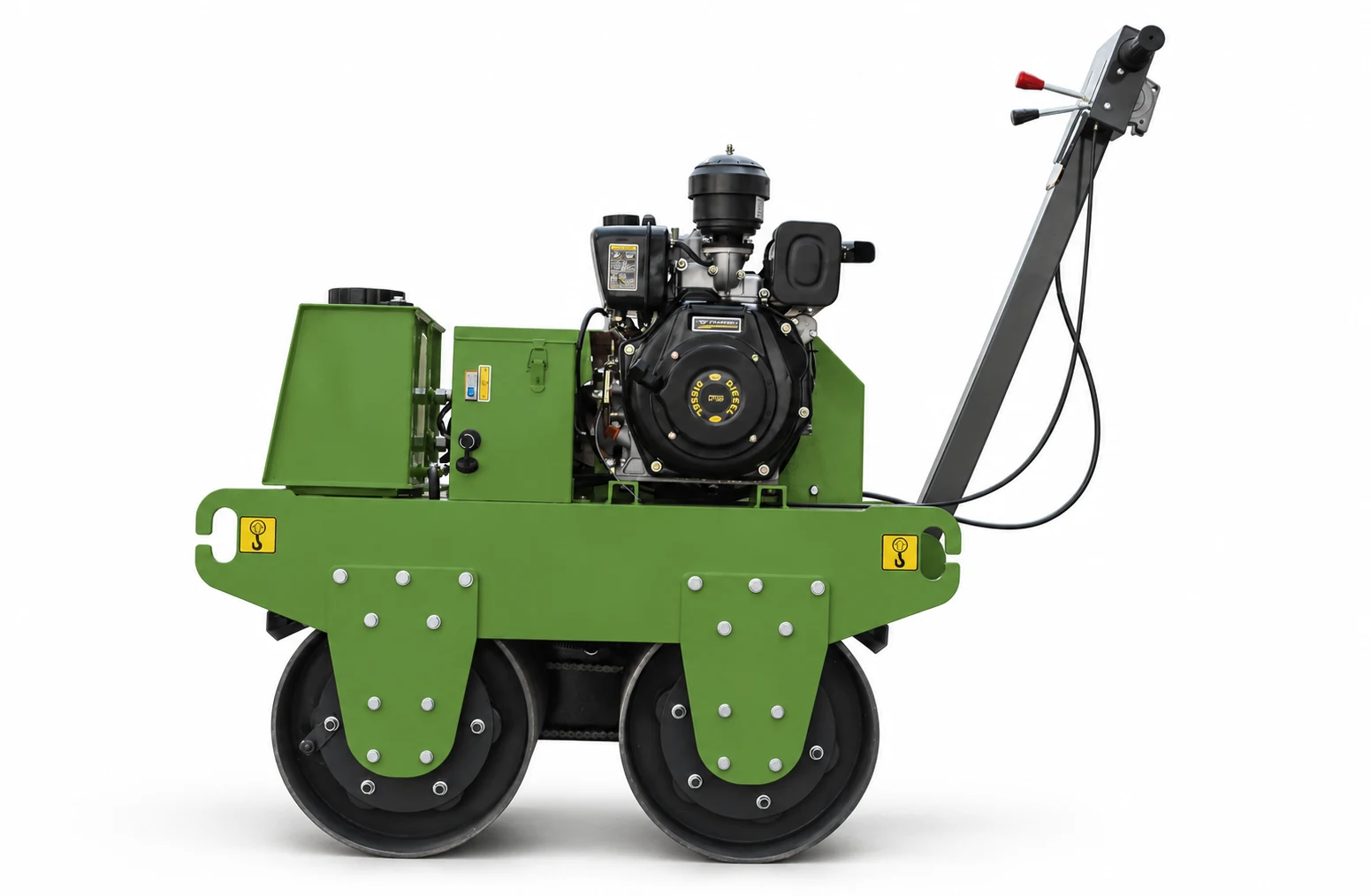 Proposed IDASION paint scheme
A mini road roller compacts prepared layers using drums and, where specified, vibration. Suitability depends on the material, moisture, layer thickness, working area and required result. Drum width or machine mass alone does not establish compaction performance.
Model references: YL450 / YL600A / YL600C / YLS450 / YLS600A / YLS600B / YLS600C / JSY700 / JS800 / JS1000 / JS3500 / JS6000
| Item | Configuration / reference |
|---|---|
| Product families | Single- and double-drum configurations |
| Power choices | Gasoline / diesel, model-specific |
| Width selection | Use the model table, not the source family headline |
| Required before order | Vibration data, operation layout, compaction task and transport plan |
| Specification | YL450 | YL600A | YL600C | YLS450 | YLS600A | YLS600B | YLS600C | JSY700 | JS800 | JS1000 | JS3500 | JS6000 |
|---|---|---|---|---|---|---|---|---|---|---|---|---|
| Machine weight (kg) | 260 | 305 | 342 | 450 | 480 | 516 | 550 | 970 | 1070 | 1580 | 2750 | 5200 |
| Drum width × diameter (mm) | 450 × 426 | 600 × 426 | 600 × 426 | Front/rear 450 × 426 | Front/rear 600 × 426 | Front/rear 600 × 426 | Front/rear 600 × 426 | Front/rear 700 × 530 | Front/rear 800 × 530 | Front/rear 1000 × 610 | Front 1200 × 920 | Front 1450 × 1060 |
| Dimensions with handle folded, source label (mm) | 1050 × 590 × 1100 | 1650 × 760 × 1100 | 1650 × 760 × 1100 | 1650 × 590 × 1100 | 2450 × 780 × 1150 | 2450 × 780 × 1150 | 2450 × 780 × 1150 | 2100 × 860 × 2070 | 2200 × 920 × 2070 | 2300 × 1120 × 2150 | 3600 × 1350 × 2300 | 4560 × 1650 × 2600 |
Compare each model separately by operating mass, drum width and transport dimensions. Confirm the engine, starting arrangement and dimensions for the ordered machine. Compaction results depend on the material and operating conditions.
Confirm the exact model, options, destination requirements and delivered configuration in the written quotation. Family ranges describe different models, not simultaneous performance.
Customers need an appropriate roller and documented operating limits. Keep model size, transport and required compaction evidence clear across the dealer offer.
Segment customers by material, access and required result. Avoid using the broad family name as a promise of compaction depth or density.
Request vibration data, operator arrangement, dimensions and available inspection records. Confirm how the selected machine will be packed and handled.
Request the model-specific manual, parts identification and maintenance schedule. Confirm initial consumables, warranty handling and local service responsibilities.
Use the customer application, exact configuration and support plan to compare offers.
Record soil or paving material, layer thickness, moisture conditions, required test result and working area. Ask for a model recommendation based on those inputs.
Compare drum width, overall width, mass, turning room and loading arrangements. Confirm operator layout and machine controls for the chosen model.
Request vibration frequency and force, operating instructions, water or spray arrangement where relevant, maintenance and transport details. Include wear items and warranty procedures in dealer sourcing.
A useful offer explains both the equipment and the supply scope.
Compare the exact model, power, working configuration and included items. Keep standard equipment and options separate in each quotation.
State the destination. Confirm transport dimensions, loading arrangements and the agreed quotation basis before comparing delivered costs.
Request model-specific manuals, parts references, maintenance information and warranty responsibilities. Discuss your local service resources and repeat-order plan.
Clarify the equipment and cooperation scope before placing an order.
Discuss Your RequirementsSuitability depends on the material, layer, moisture, operating configuration and required result. Submit the actual task and request model-specific operating information rather than assuming one roller suits every surface.
No. The drum working width and the machine's access width are different dimensions. Check both against the area to be compacted and the narrowest entrance.
No. The model table includes different widths, with larger JS3500 and JS6000 entries. Use each machine's own dimensions; do not apply the headline range to the full family.
The source table does not establish a verified compaction-depth figure. Material, lift thickness and required density matter. Ask for vibration data and a technical assessment for the proposed job.
Match local customer projects, access and transport capability to model size and working method. Compare preparation, maintenance parts and stock exposure alongside machine price.
Confirm model, engine, starting and operator arrangement, drums, vibration data, dimensions, transport weight and accessories. Request manuals, parts identification and warranty responsibilities for the actual supply.
Use the buying guidance and distributor information to prepare your next discussion.
A dealer sourcing decision needs a repeatable configuration, evidence of the supply source and a workable parts and order process. Compare those elements alongside the landed purchase scope before selecting equipment for your local range.
Read the GuideChoose compact equipment by the task it must complete: transporting material, loading and working with attachments, compacting a specified surface, or producing small concrete batches. Site width is important, but payload, working envelope, material and the complete cycle determine whether a small machine fits the job.
Read the GuideShare the product, configuration, customer application and destination. These details help us discuss a useful B2B supply proposal.